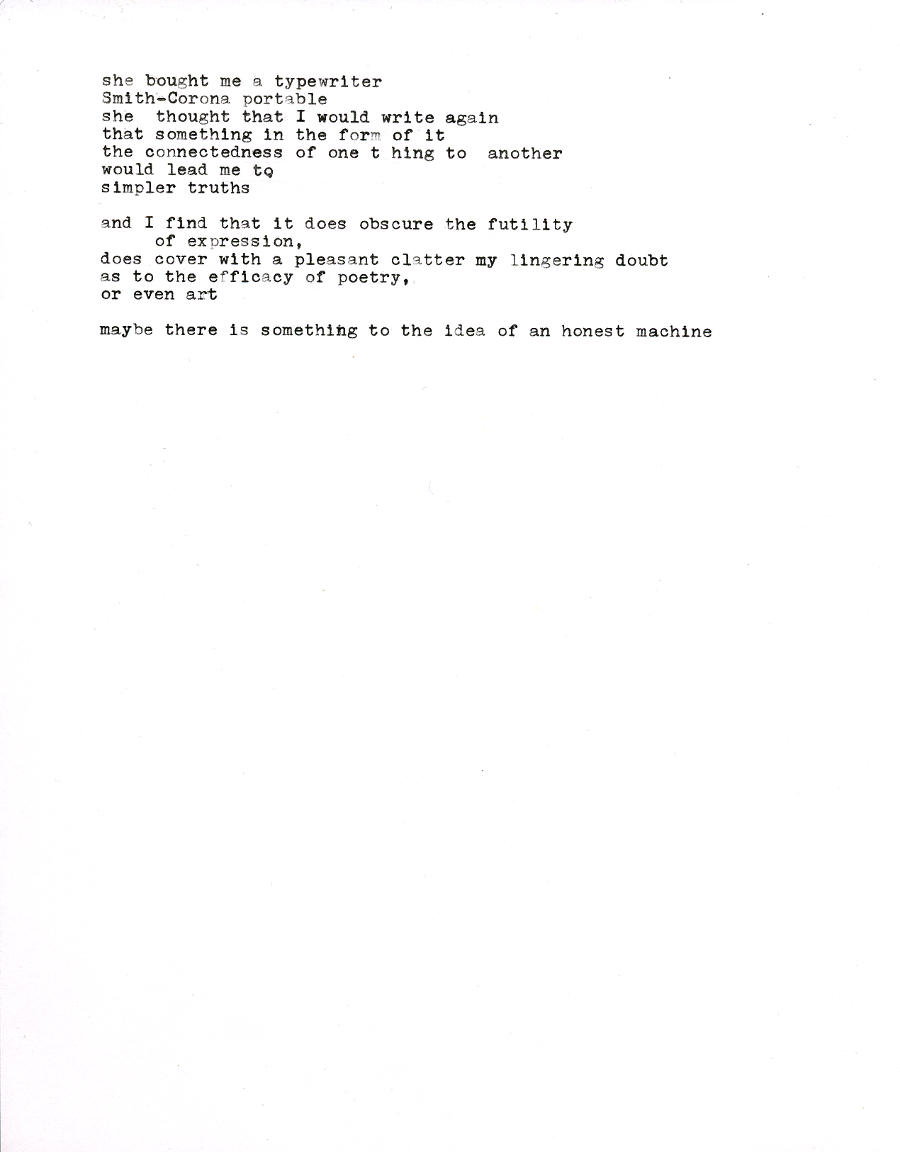



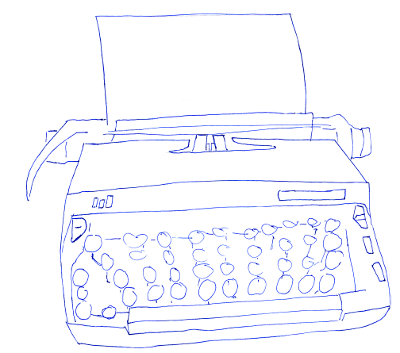
I found a typewriter in a secondhand shop north of Seattle somewhere. It wasn't anything special—just a 60s-era Smith-Corona. I irrationally sort of wanted it, but I didn't buy it because I knew that having a typewriter was dumb, and also I was poor and it was $15. So I looked at it for a while, typed a few words, waited for my girlfriend to be done looking at every book, and went back home to the city. A couple of days later she called and said she'd be late from work; around nine, she finally showed up carrying that typewriter. She was pretty impoverished then too; it was incredibly generous of her. She said, "maybe you'll write something."
The story behind that statement is important. I've always had trouble with writing. I'm not a bad writer, but the actual sentence-by-sentence or line-by-line process of writing is agonizingly difficult and time-consuming for me. I've spent literally days writing things that should have taken an hour or two at most. Part of it is an inability to leave anything alone; I start editing as soon as I start writing, and the only time something feels "done" is when I'm satisfied that it's perfect. This only happens when I am too exhausted to tell anymore. So what my girlfriend was saying was, "maybe this will fix it so that you can write."
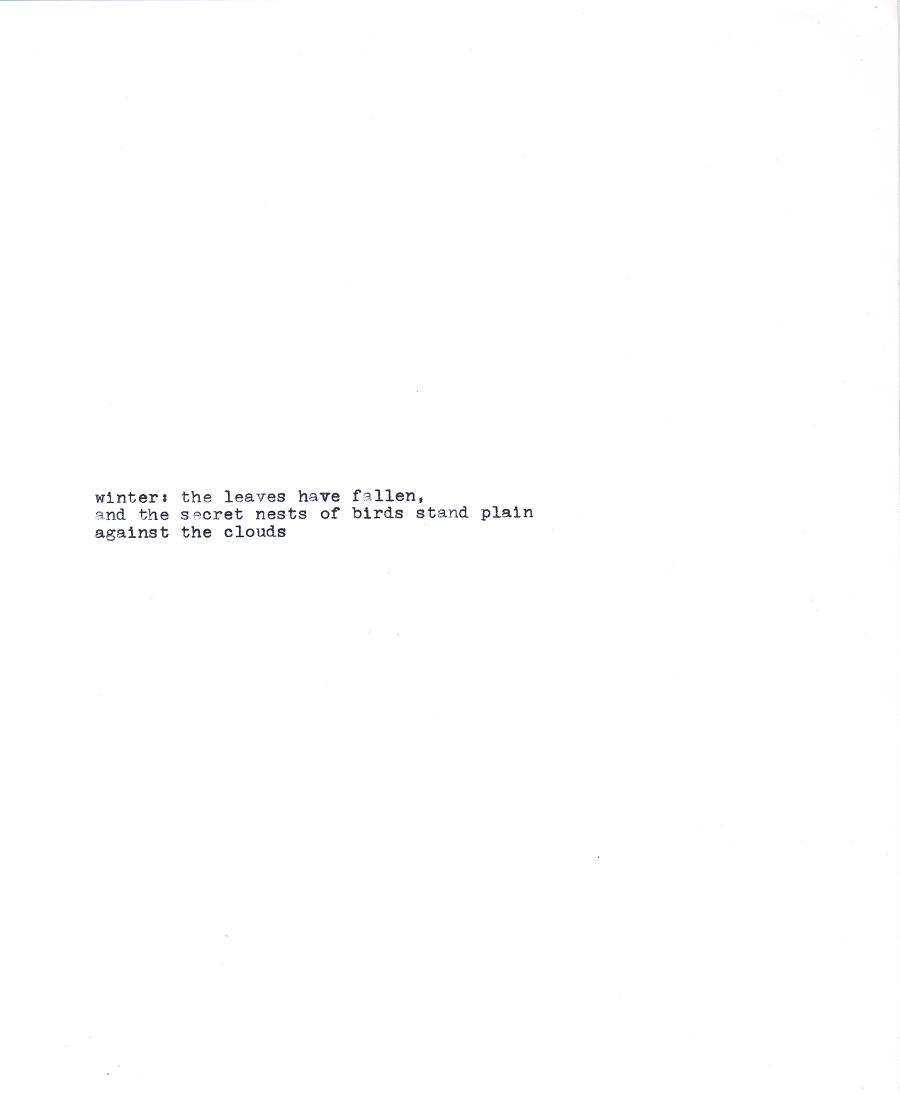
It kind of did. Not perfectly, but some. I can type much faster than I can write by hand, and unlike on a computer, it's impractical to edit until I've finished at least a page. It keeps my worst tendencies as a writer in check. I'm aware that it's a little ridiculous, and it makes a lot of noise, but it helps.